To begin, the study of these signs, codes and conventions is called semiotics. ‘Semiotic analysis’, is a way that we analyze these signs, and then translate them into meaning.
Codes – What are codes? Codes are, ‘systems of signs, which create meaning’. Codes are extremely common among films across the media industry. By the same token, codes can be divided into two categories.
- Technical – Ways in which equipment, both during and after filming, is used to convey meaning, provoke feeling, and tell a story for a films audience.
- Symbolic – Things that go on underneath the surface of what is very obvious in a film. A very common example is a character action which could be used to depict what the actor is feeling.
Conventions – “Codes and conventions are used together in any study of genre – it is not enough to discuss a technical code used such as camera work, without saying how it is conventionally used in a genre.” For example, it is not JUST how the technical code of lighting is used, it is also how it may be used conventionally.
Mise en scene – The arrangement of both physical and virtual elements in a scene. Examples such as costumes, actors, location, color, and CGI objects make up Mise en Scene.
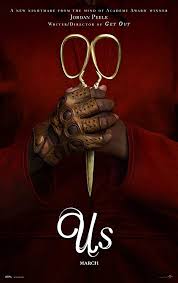
As you can observe above, US can be clearly assumed to be a ‘horror’ movie. We can conclude this through the use of technical codes such as dark lighting/dark coloring in clothing. This is solely the cover/poster of the movie, yet with just one picture, the audience can easily assume what the movies genre is.
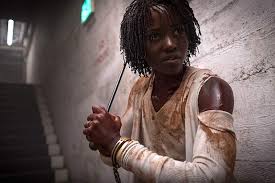
In the scene above, one can see how the use of technical codes was used. From what is easily observable, one can see that our actor is in a grimy, dark setting. The use of limited lighting, and dark coloring on the walls can make a location appear eerie. Moving on to our actor themselves, she is quite visibly covered in blood and dirt. Having a ‘beat-up’ actor can provoke suspense or fear in the person viewing these scenes. Furthermore, this is not the only way codes are used, symbolically, the actors shaking and heavy breathing in the actual film are ‘hidden’ messages that can very sneakily yet obviously show distress. The most common form of symbolical codes are by character actions.
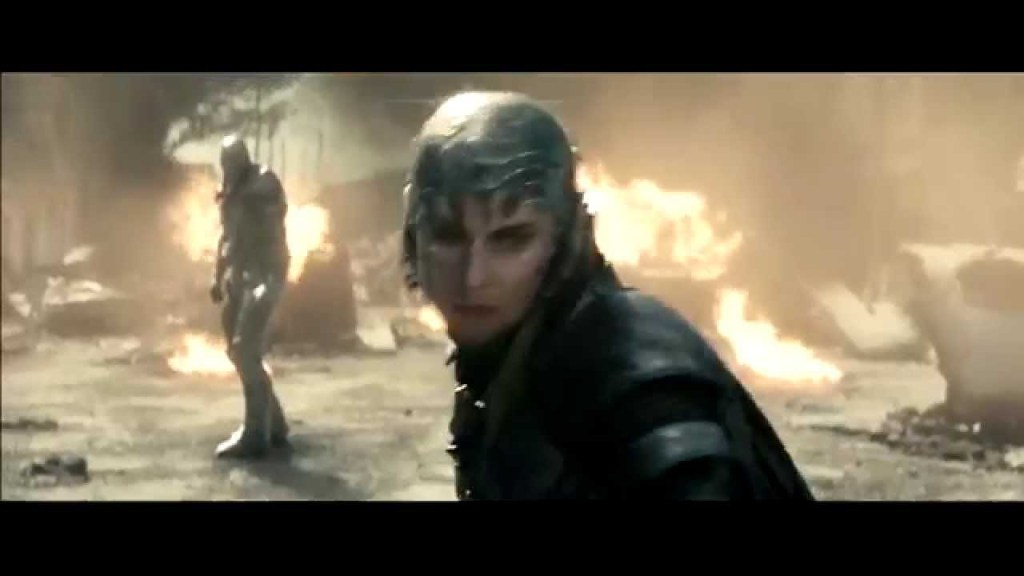
Above is an example from the very successful movie, Man Of Steel (2019). The scene quite clearly depicts a battlefield between what could be the two characters standing up, though it doesn’t necessarily have to be between them. A very big technical code used here is the fire in the background. Editing was the equipment used to accomplish this, and it provides for a look into what is most likely a very high energy, sci-fi, fighting scene. One can clearly see a figure in the distance that stands quite tall and has an almost alien-like form. Since this was also achieved through the use of physical and virtual equipment, one can say that a technical code was used to inspire the ‘sci-fi’ genre.

Though codes and conventions may seem purely dominated by physical/visual elements in a scene, audio can also be used to portray a story. As seen above, the movie it is most likely a horror film. Diegetic and Non-Diegetic sounds can both be used to provoke fear.
- Non-Diegetic: Sounds that have been edited into the scene in post production.
- Diegetic: Sounds that are naturally part of the film/scene which havent been edited in.
In the trailer for the movie ‘IT’, the use of non diegetic sounds can be clearly heard. Sound effects such as creaking and eerie music is a VERY usual element in both the trailer and the film.
 Sebastian's Blog